MEMORIAL PLYNTHS
Voices of An Gorta Mór
THE INFORMATION STATIONS
These eight themed stations line the walkways of The Irish Memorial. Replicated here, they tell the story of Ireland’s Great Hunger, guiding visitors from the prelude of disaster to the lessons of history.
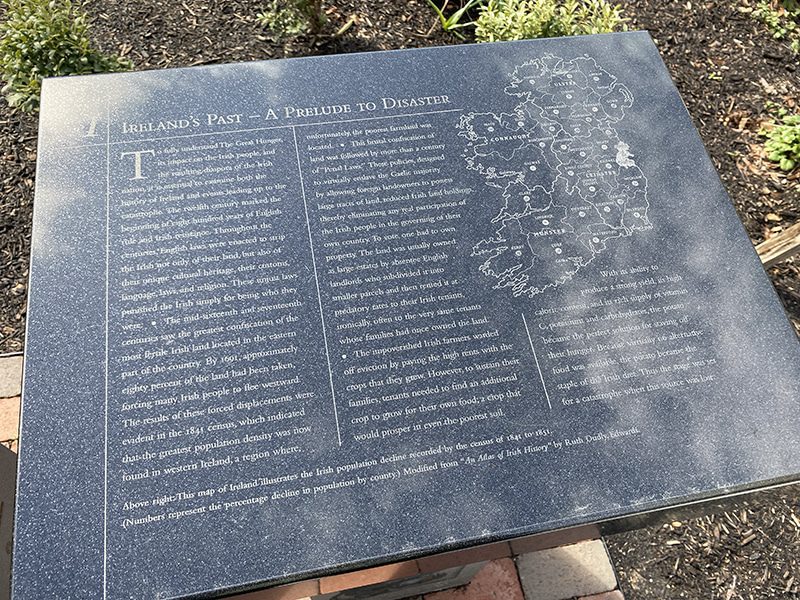
01. Ireland’s Past
To understand the catastrophic scale of The Great Hunger, one must look closely at the centuries of political and social subjugation that preceded it. By the early 19th century, a complex system of Penal Laws had systemically stripped the native Irish Catholic population of their rights to own land, obtain an education, or hold public office.
Relegated to the status of impoverished tenant farmers on the very soil their ancestors once ruled, the majority of the Irish people were forced to subsist on tiny, subdivided plots of rocky land. This engineered poverty created a dangerously fragile agricultural economy, leaving millions of families entirely dependent on a single, high-yield crop for their daily survival: the potato.
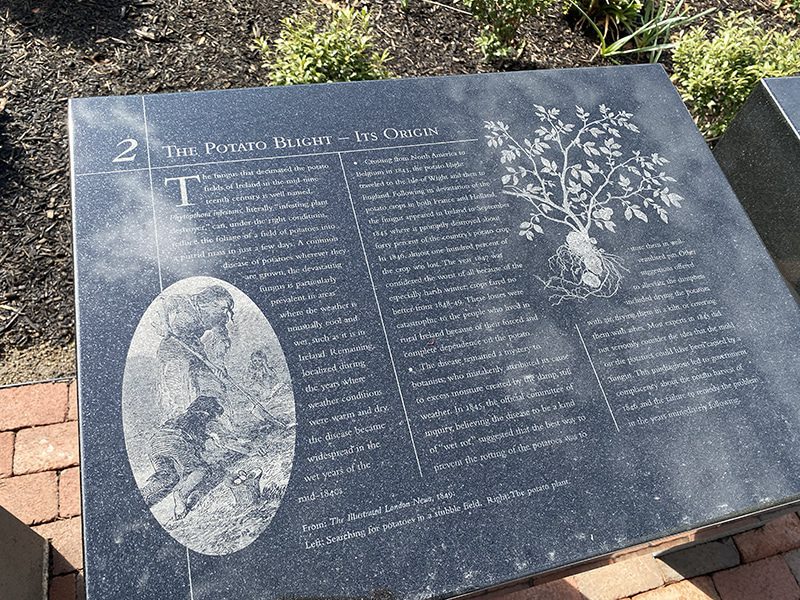
02. Potato Blight
In the late summer of 1845, a mysterious and devastating airborne fungus known as Phytophthora infestans drifted across the Irish countryside. The blight struck with terrifying speed. Farmers who had gone to sleep expecting a bountiful autumn harvest awoke to find their fields transformed into blackened, putrid, rotting sludge.
Because the specific variety of potato grown by the peasantry—the Lumper—possessed no natural genetic resistance to this new pathogen, the crop failure was absolute. What began as a troubling agricultural anomaly quickly spiraled into an inescapable national nightmare, as the blight returned year after relentless year to annihilate the nation’s only food source.
03. An Gorta Mór
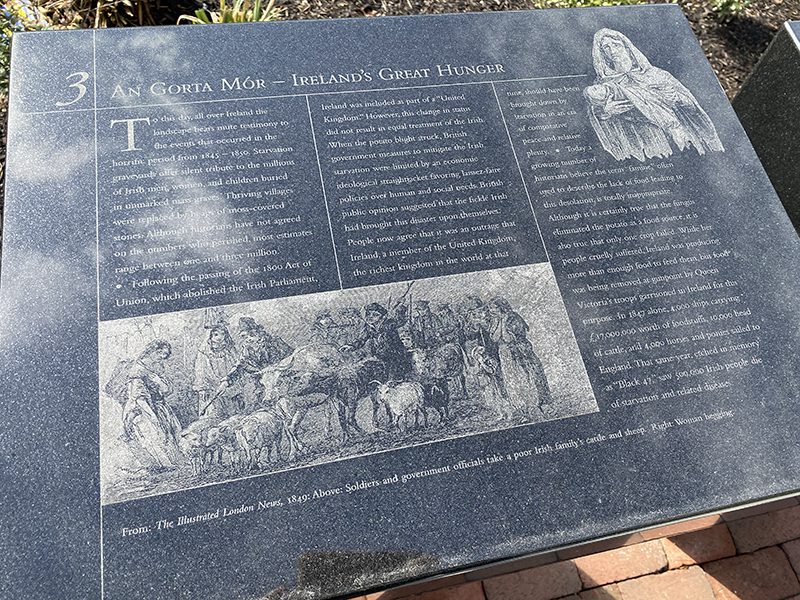
“An Gorta Mór” (The Great Hunger) descended upon Ireland with an unimaginable ferocity. From 1845 to 1850, the once-vibrant landscape was fundamentally and permanently altered. Thriving rural villages were hollowed out, eventually replaced by silent heaps of moss-covered stones that still dot the western coastlines today.
The tragedy was violently compounded by systemic evictions. Landlords, eager to clear their estates of destitute tenants unable to pay rent, deployed armed constabularies to tear down the thatched roofs of peasant cottages. Entire families were turned out into the freezing winter winds, left to wander the barren roads with no food, no shelter, and no hope of rescue.
04. Starvation
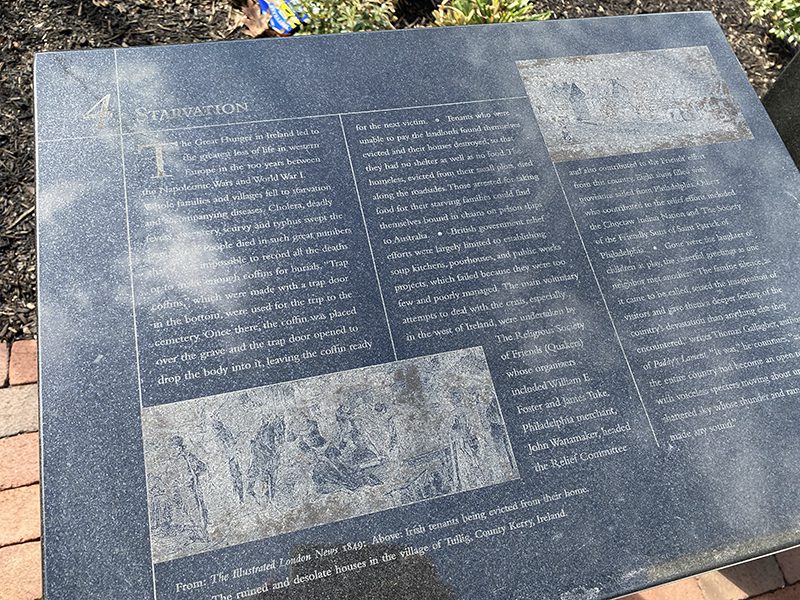
While starvation itself claimed countless victims, it was the diseases born of profound, prolonged malnutrition that dealt the final, devastating blow. Typhus, dysentery, cholera, and scurvy swept through the weakened population like wildfire, turning crowded workhouses and roadside ditches into epicenters of mass death.
The death toll climbed so rapidly that the customary rituals of mourning and burial were entirely abandoned. Carpenters could not construct coffins fast enough, leading to the use of “trap coffins” with hinged bottoms that allowed bodies to be dropped into unmarked mass graves. By the time the worst had passed, over a million souls had perished in the shadows of the Celtic crosses.
05. Passage & Emigration
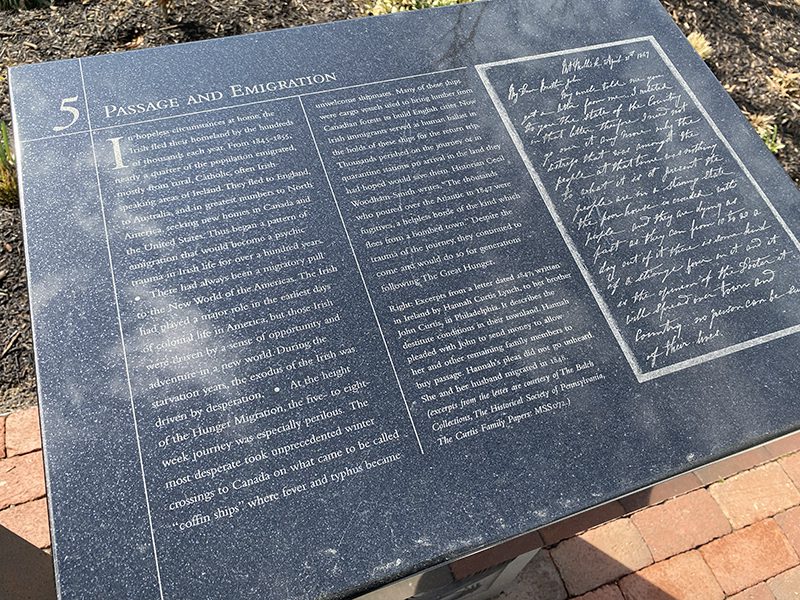
Faced with the absolute certainty of death at home, over a million Irish men, women, and children made the agonizing decision to flee. They gathered what little they had left and boarded notoriously overcrowded, unventilated cargo vessels bound for North America. For many families, this departure was treated as a “living wake,” knowing they would likely never see their homeland again.
The five-to-eight-week voyage across the tempestuous Atlantic was an ordeal of its own. Conditions in the damp, dark holds were horrific, allowing ship fever and typhus to run rampant. In 1847 alone, tens of thousands perished at sea, earning these vessels the grim and lasting title of “coffin ships.”
06. Arrival & Reception
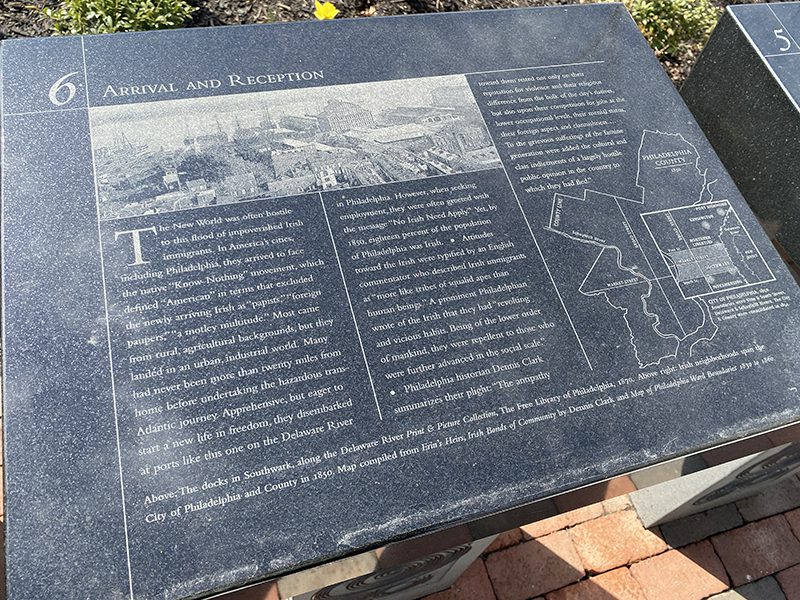
Those who miraculously survived the harrowing oceanic crossing arrived at the docks of North America exhausted, traumatized, and entirely destitute. In ports like Philadelphia, Boston, and New York, their first experience of the New World was often a prolonged, fearful stay in offshore quarantine stations like the Lazaretto, where they were rigorously inspected for disease.
Upon finally stepping ashore, the refugees faced a new set of formidable challenges. Met with deep-seated prejudice, language barriers, and fierce competition for the lowest-paying manual labor, the early Irish immigrants were relegated to squalid, overcrowded slums. Yet, driven by the sheer necessity of survival, they began to carve out a foothold in their new home.
07. The Irish In America
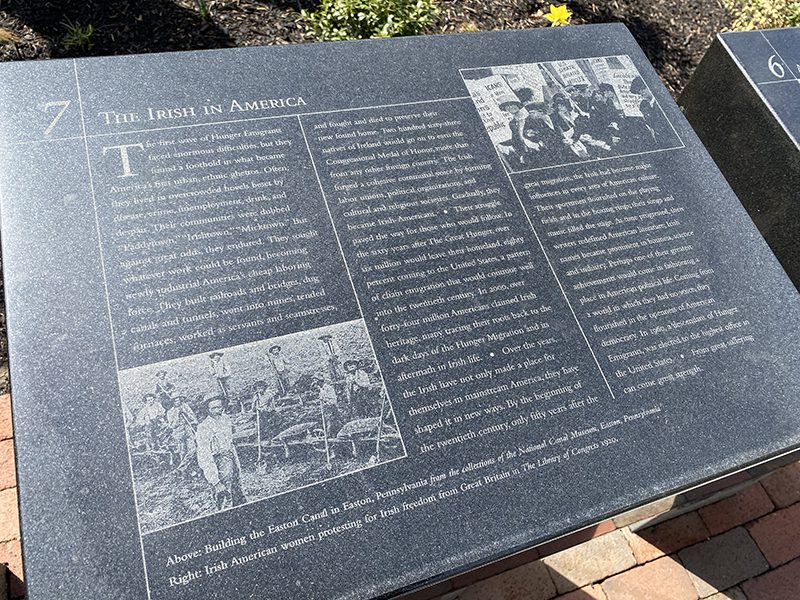
Despite the crushing adversity of their arrival, the Irish immigrants possessed an indomitable spirit and a fierce, unifying loyalty to one another. They took on the grueling, dangerous work that built the infrastructure of a rapidly expanding nation—digging the canals, laying the railroad tracks, and mining the coal that fueled the American Industrial Revolution.
Over generations, this scattered diaspora transformed into a powerful cultural and political force. Through the establishment of tight-knit parish communities, labor unions, and civic organizations, the descendants of the famine survivors rose from the margins of society to the highest levels of American government, industry, and the arts.
08. Lessons Of The Hunger
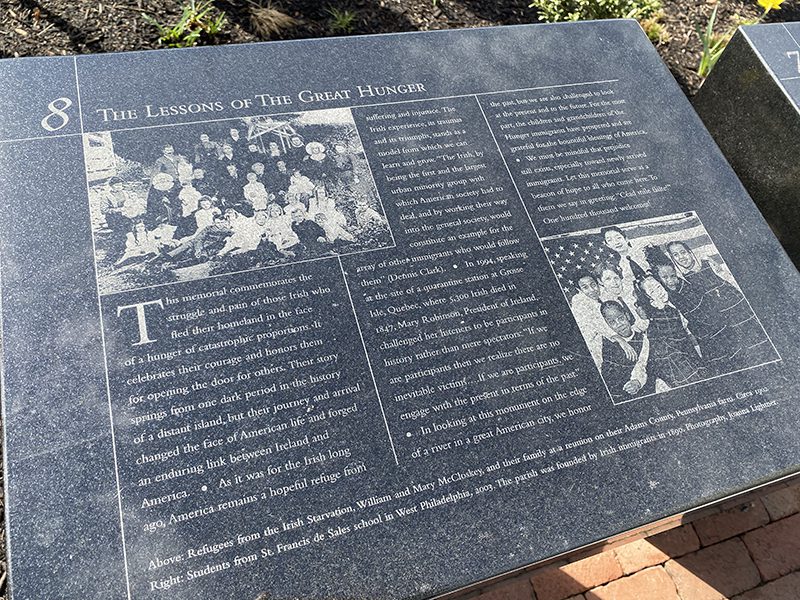
The Irish Memorial stands not only as a solemn tribute to the million lives lost and the million forced into exile, but as a permanent, cautionary monument to the consequences of political indifference and systemic injustice. An Gorta Mór was a tragedy compounded by human failure—a stark reminder of what happens when commerce and export are valued above human life.
Today, the story of the Irish diaspora challenges us to look upon modern refugees and immigrants with profound empathy. It demands that we recognize the universal human right to seek sanctuary, dignity, and a better life, ensuring that the dark lessons learned from Ireland’s Great Hunger are never forgotten in the modern world.
Visit the Memorial
PLAN YOUR VISIT TO THE PARK
The Memorial Park is located at a temporary location at 109 Spruce Street in Old City, Philadelphia. Come and experience the story of resilience firsthand.