THE GREAT HUNGER
An Gorta Mór: The Truth Behind The Tragedy
The Lumper Potato: The sole source of nutrition for millions.
The Fragile Foundation
By 1845, the potato had become the chief source of nutrition for millions of Irish people. Potatoes, specifically the Lumper variety, were one of the few crops that could be grown on the small, infertile plots of land the people were forced to occupy after centuries of land confiscation. This extreme dependency set the stage for an unprecedented human catastrophe.
The Lumper was prized not for its flavor, but for its staggering yield in poor, rocky soil, allowing a single acre to support a large family for a year. However, this lack of agricultural diversity meant that the survival of the entire nation rested upon a single, vulnerable biological thread. When the blight finally struck, it didn’t just destroy a crop—it dismantled the very foundation of Irish life, leaving a population with no alternative for survival and no safety net to catch them.
The Failure Of The Crop
Triggered by the failure of the potato crops between 1845 and 1850, The Great Hunger (An Gorta Mór) led to the single greatest loss of life in Europe between the Napoleonic Wars and World War I. While the blight was a biological event, the tragedy was compounded by the fact that only one crop failed.
As the fungus *Phytophthora infestans* turned entire fields into rotting sludge, other agricultural products—grains, cattle, and poultry—continued to be produced in abundance. However, due to a complex system of land ownership and export-driven trade, these life-saving resources were shipped out of Irish ports even as the local population perished. This stark contrast between the natural failure of a single tuber and the systemic failure of relief efforts transformed a local agricultural crisis into a world-altering humanitarian disaster.
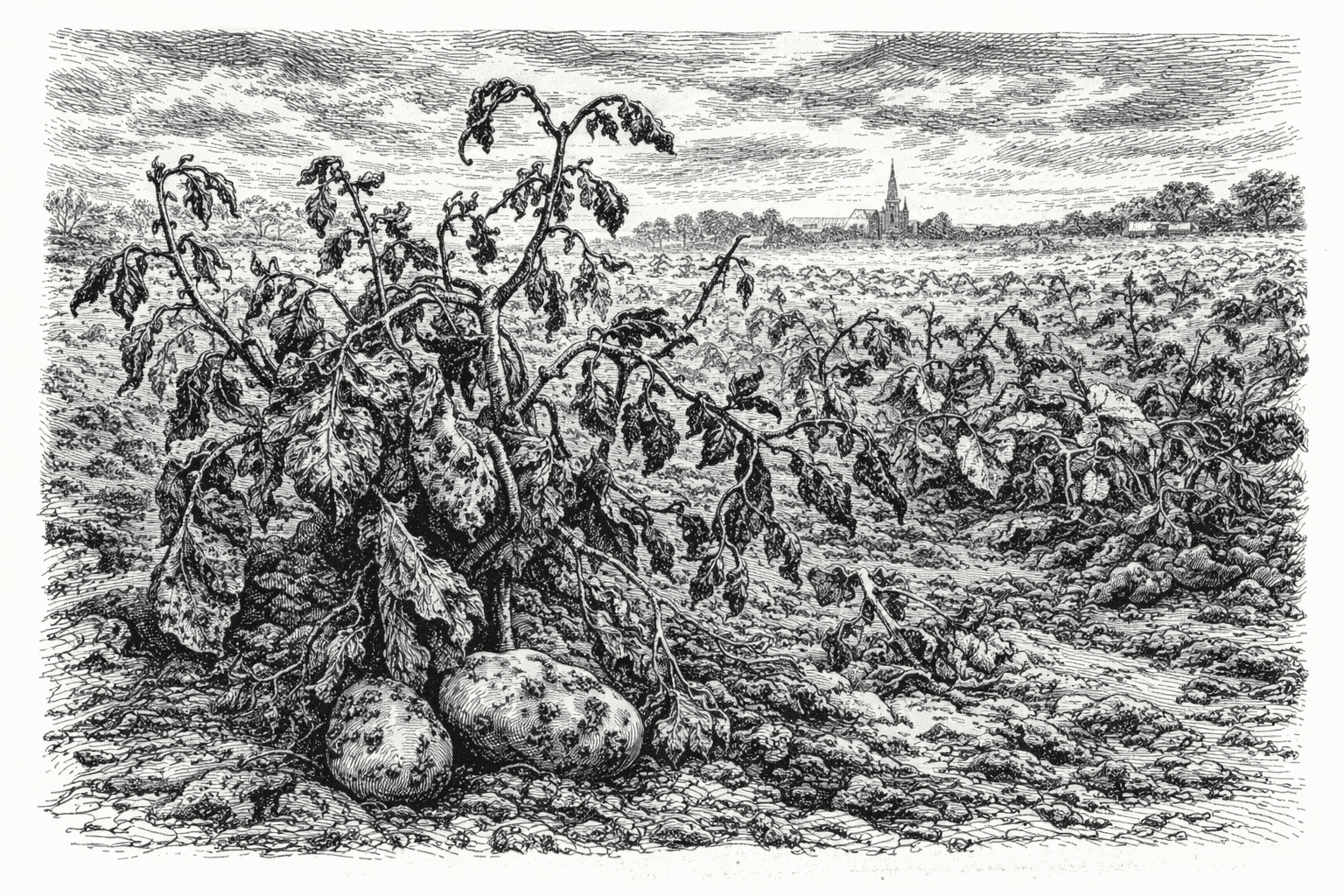
Phytophthora infestans: The blight that rotted the nation’s food supply.
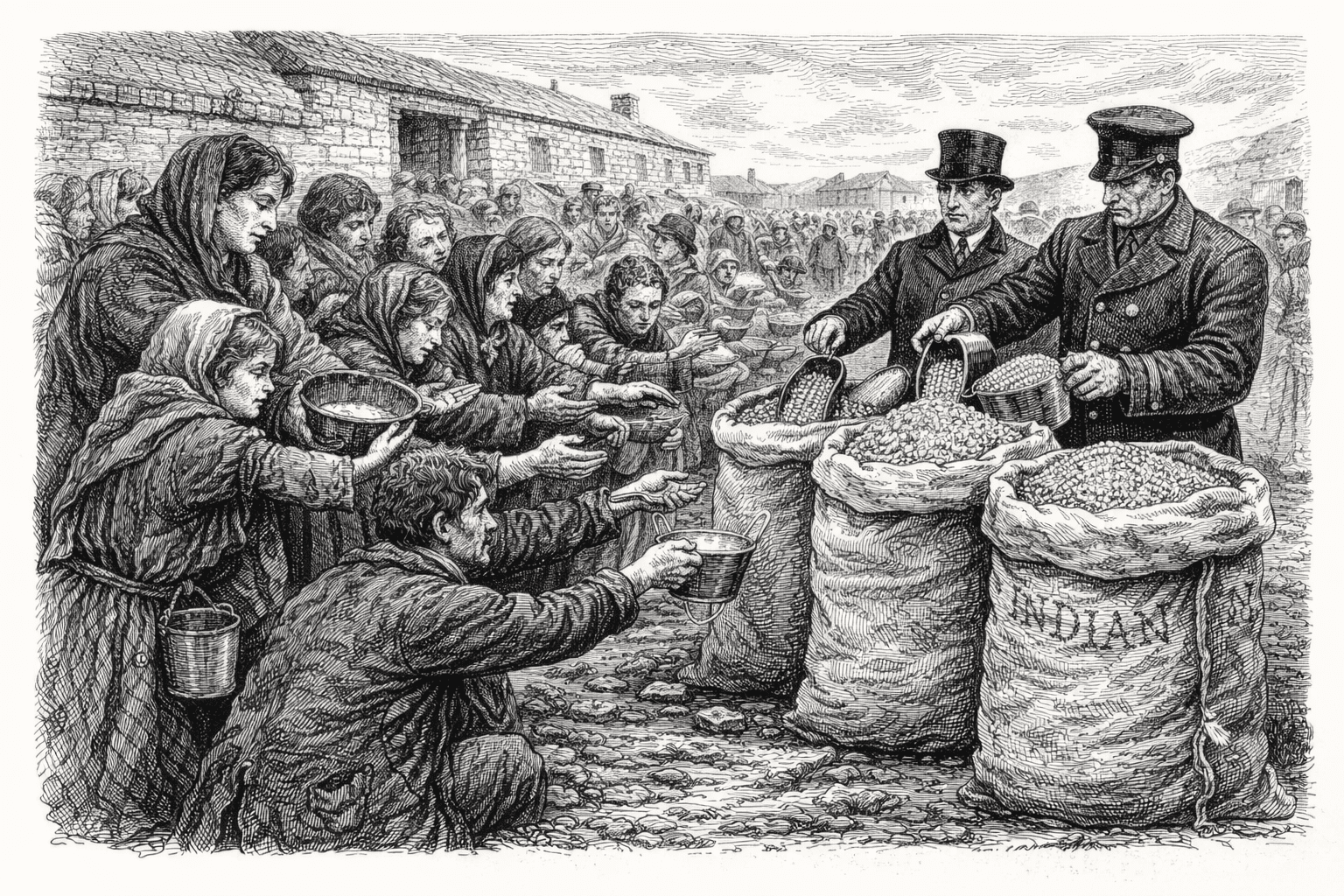
Export Amid Starvation
Throughout the darkest years of the Great Hunger, Ireland remained a net exporter of food. While the potato, the primary life-line for the peasantry lay rotting in the fields, vast quantities of high-quality grains, livestock, and dairy products were being harvested and shipped under armed guard to British and foreign markets. This devastating paradox meant that while millions faced absolute starvation, the machinery of commerce continued to move food away from those who needed it most.
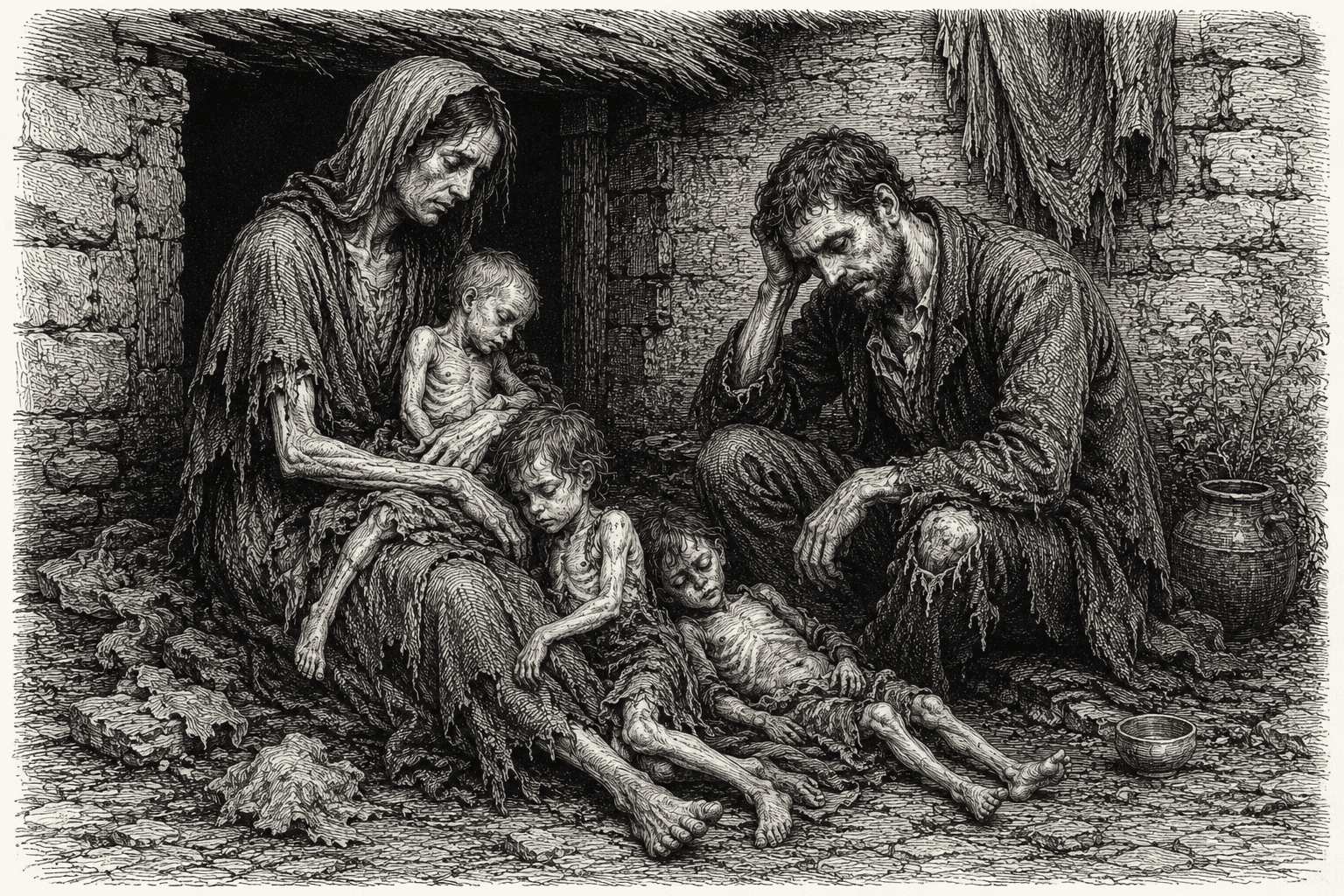
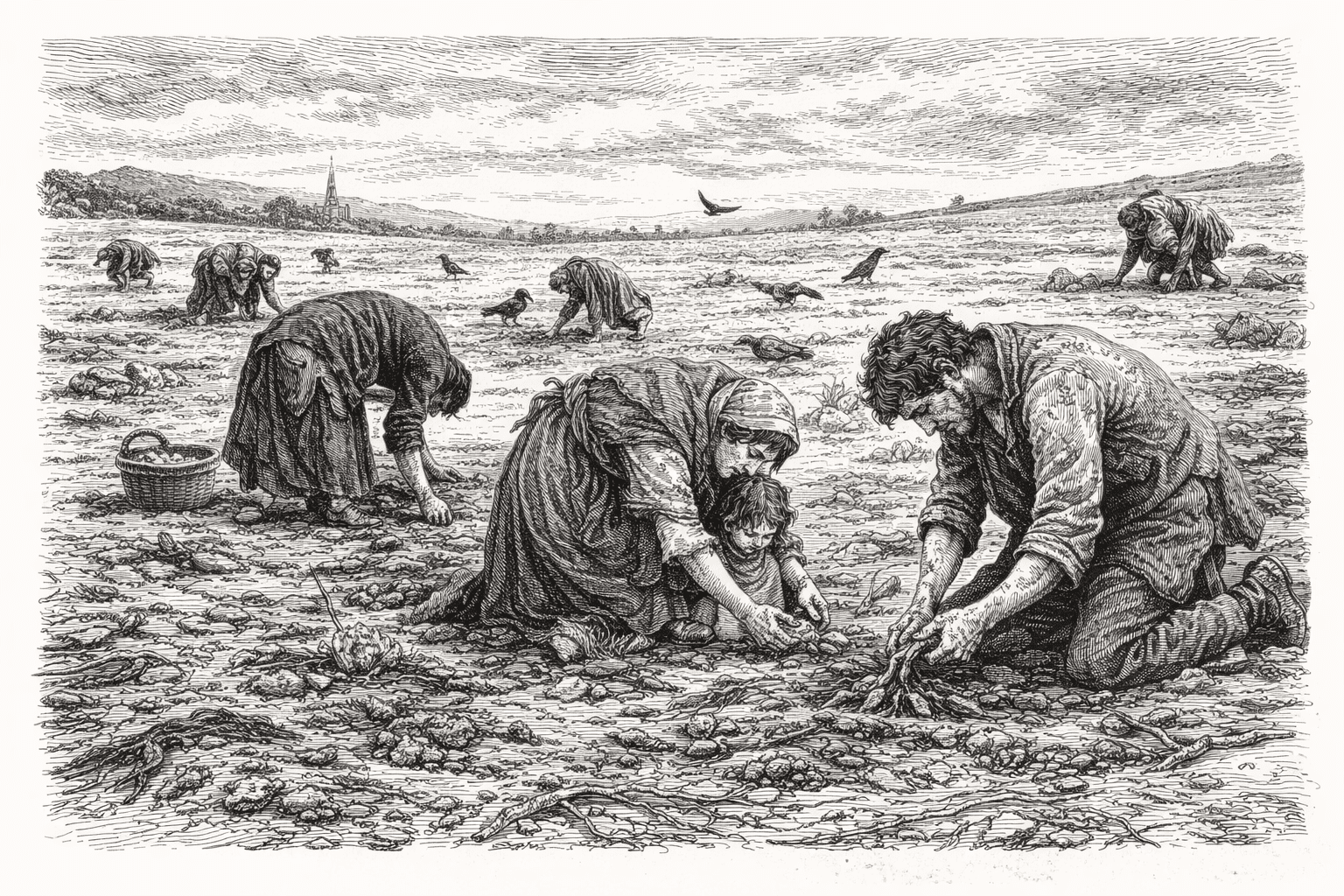
Survival on the Margins: A family in the blackest days of Irish history.
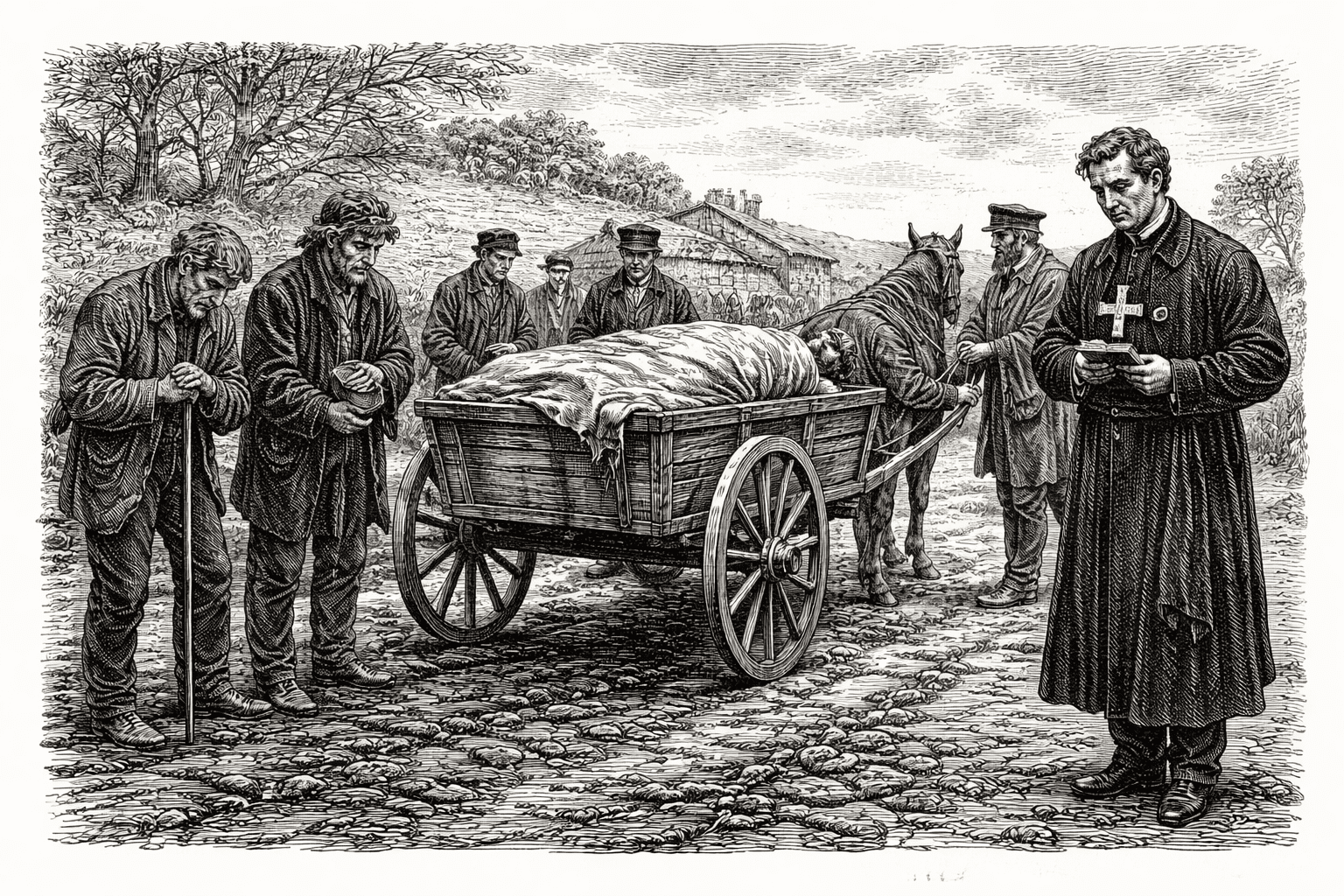
Loss of Dignity: The toll on the community and the church.
The Final Desperation
Those who survived the initial years of hunger were often forced into overcrowded workhouses or compelled to seek a new life across the Atlantic. The years 1845-1850 represent the blackest days of Irish history, resulting in a million dead and another million forced to emigrate. These were not choices made by preference, but by the absolute necessity of survival as the traditional structures of Irish society collapsed under the weight of sustained famine.
The departure from Ireland was a traumatic rupture; for many, it was a “living wake,” as families knew they would likely never see their loved ones again. Driven by the fear of the workhouse and the shadow of the grave, they boarded the ‘coffin ships’ with nothing but their faith and a fierce determination to endure. This mass exodus did more than just empty the Irish countryside—it scattered the seeds of the Irish nation across the globe, creating a diaspora that would eventually find its voice and its heart in places like Philadelphia.
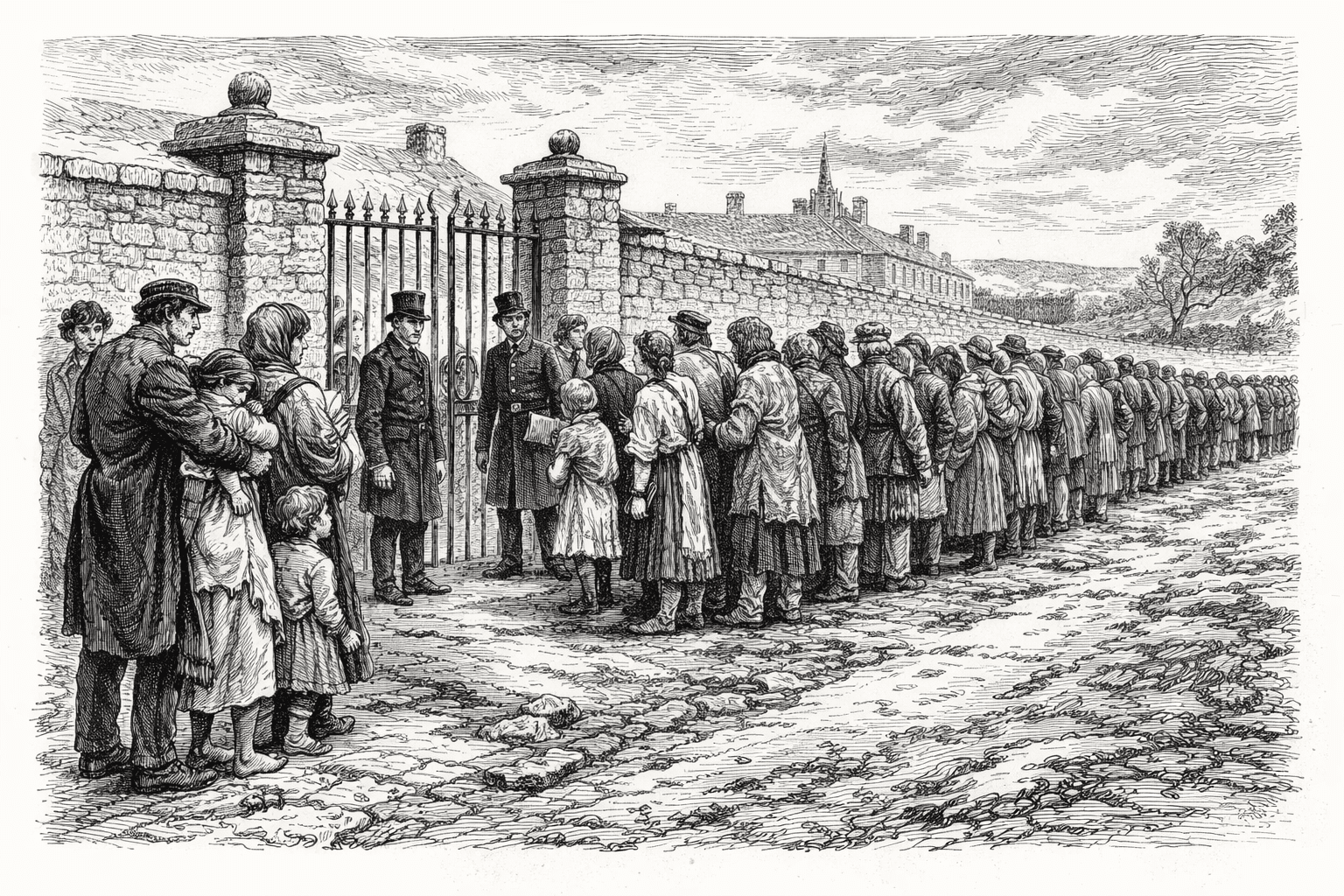
The Workhouse Gate: The last resort for the destitute.