IRELAND IN 1847
The Politics, Economics, And Tragedy Of The Great Hunger
“Ireland is in your hands, in your power. If you do not save her, she cannot save herself. I solemnly call upon you to recollect that I predict with the sincerest conviction that a quarter of her population will perish unless you come to her relief.”
— Daniel O’Connell, “The Liberator,” addressing the British House of Commons, 1847
England did not save her. When the potato blight struck in 1845, caused by an airborne fungus called phytophthora infestans that arrived in Ireland on cargo ships coming from the Americas, it turned lush, green potato fields into putrid, black slop, obliterating the only staple food of some 3 million Irish rural peasants. By the end of what came to be known as “The Great Hunger” six years later, more than 1 million of Ireland’s 8 million people had died and more than a million had emigrated, most to America.
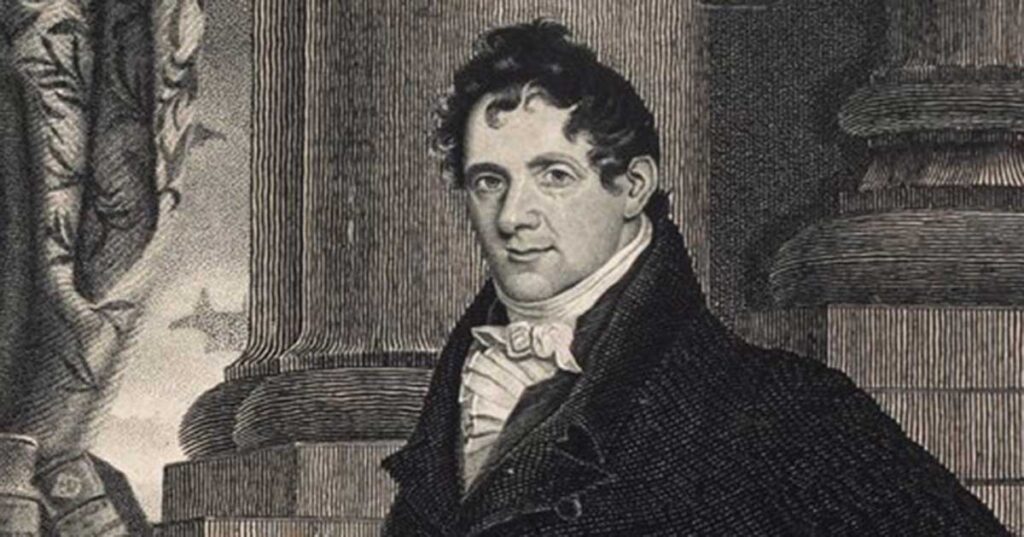
Daniel O’Connell, The Liberator.
Centuries Of Tyranny
Not only did England not save Ireland, but in the years leading up to the blight the anti-Catholic British government had set in motion a series of events that, when combined with Draconian social policies established while the Irish were starving, created a catastrophe so devastating it has been described as “the Irish Holocaust.”
Starting in 1695, the British began imposing a series of Penal Laws to punish the Irish for supporting the Catholic Stuart King, James II… These laws were intended to hobble the Irish so they would never be able to threaten Protestant Rule. Irish Catholics were stripped of their rights to vote, buy land, attend school, hold government office, possess weapons, speak their own language or practice their religion. Those laws were in effect until 1829, when Daniel O’Connell, a Catholic lawyer from Kerry, won the fight to abolish them.
The Workhouse System
But British “reformers” weren’t done with the Irish, whom they saw as an alien people without good moral character who lacked the work ethic and a desire for self-reliance so valued in British society. By 1835, as British industrialization destroyed Irish linen and woolen industries and the role of the Irish in the UK economy became that of a market for surplus goods, widespread unemployment swept the island.
In 1838, the British government established the Poor Law Act, modeled on the English workhouse system. Once admitted to workhouse, poor families would be separated, forced to wear uniforms and set to work splitting rocks or doing laundry—men, women, and children. It’s no wonder that during this period, nearly a million Irish left their homes for the United States where they traded splitting rocks for building canals, roads, and railways.
The Arrival Of The Blight
This was the Ireland into which a fungus wafted from Southern England to Dublin, its spores landing on healthy potato leaves, turning them black within days. Irish farmers found that they could dig healthy potatoes from under the black, stinking plant, but they too turned black and rotted within days.
By 1845, the blight had triggered a nationwide crop failure… Prime Minister Sir Robert Peel himself purchased two shipments of American corn that he intended to be sold at cost to local relief organizations. However, the corn was indigestible unless it was milled and there was a shortage of mills in Ireland. Corn was also no replacement for the potato, which is high in vitamin C and protein. The Irish ate three meals of boiled potatoes a day—roughly 14 pounds for the average working man. Corn wasn’t as nutritious nor was it satisfying. Many Irish who subsisted on corn developed scurvy, a vitamin C deficiency disease.
Global Compassion
Relief came from outside the UK, from as far away as Calcutta and Bombay, the Choctaw Indians in the US, and from Philadelphia. Here, the Philadelphia Irish Famine Relief Committee and the Philadelphia Society of Friends (Quakers), led by Thomas Cope, funneled critical relief supplies from all over the United States directly to Ireland.
This global charity knew no religion, race, or national origin. In Philadelphia, the Committee of Colored Citizens held a dedicated meeting to raise money, giving it to abolitionist and former slave Frederick Douglass to donate to Irish relief when he visited Ireland in 1846.
Laissez-Faire & Exports
While British citizens contributed over 400,000 pounds to Irish relief, the British government took a stoic stance, adhering to the popular economic trend of laissez faire. Sir Charles Trevelyan made clear what he considered the real problem: the Irish themselves and their agrarian economy, which he deemed a deep and inveterate root of social evil in 1848.
The effect of this laissez faire approach, combined with a fundamental ethnic bias against the Irish, was essentially genocidal. While the Irish were starving, the British were exporting more than enough grains and crops from Ireland to feed the entire population.