JOURNEY TO A NEW WORLD
The Exodus, The Passage, And The Reception
FUGITIVES FROM DESPAIR
Between 1845 and 1855, nearly a quarter of Ireland’s population fled. From rural, Irish-speaking areas, they poured over the Atlantic as “fugitives, a helpless horde of the kind which flees from a bombed town.” This mass exodus began a pattern of chain emigration that would become a psychic trauma in Irish life for over a hundred years.
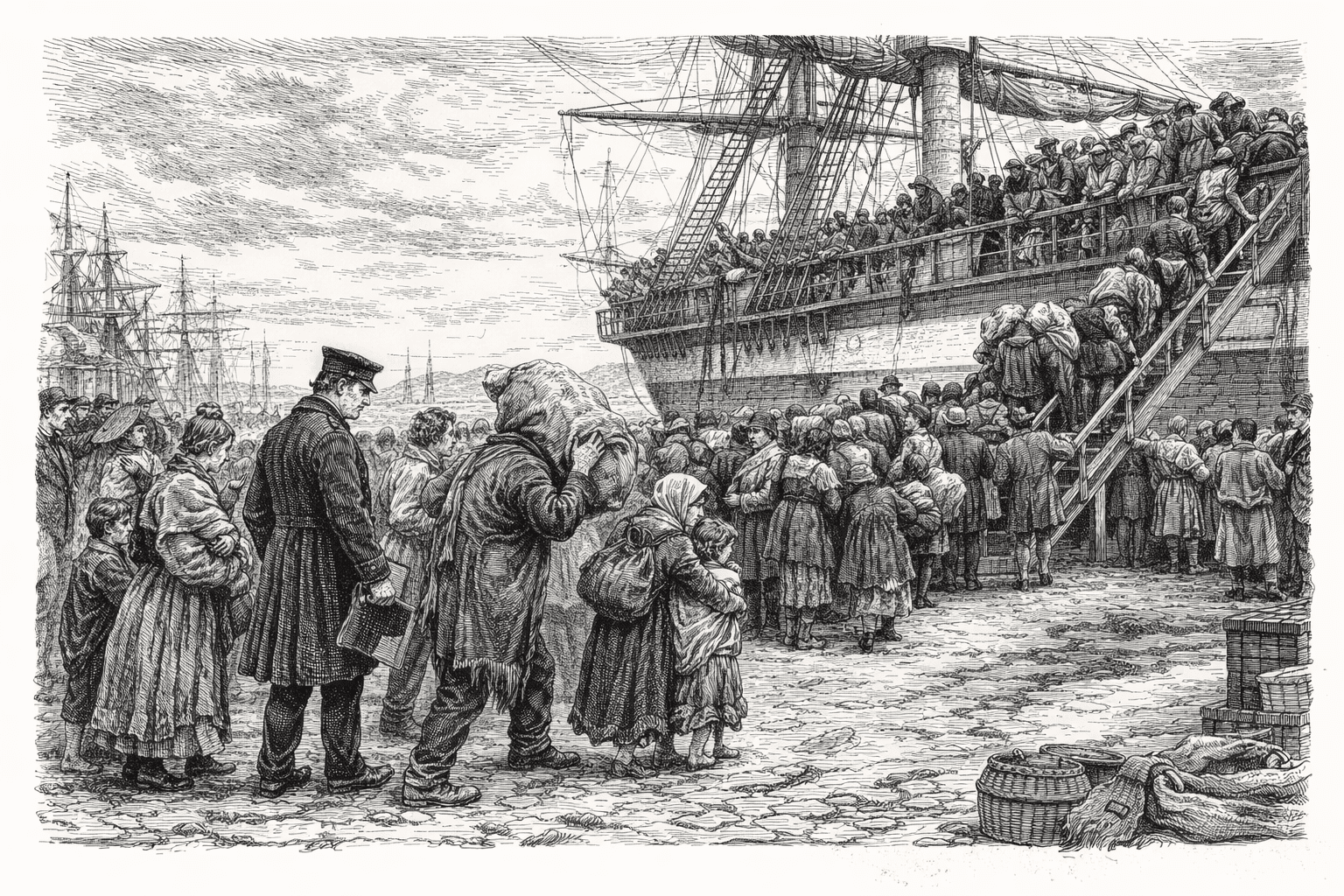
Cargo vessels turned into human transport.
The Coffin Ships
The voyage across the Atlantic took a grueling five to eight weeks. Many of the vessels were essentially cargo ships designed to carry lumber from Canada to England. On their return trips, desperate Irish immigrants were packed into the dark, damp, and unventilated holds, serving as little more than “human ballast.”
Crammed into these subterranean spaces with minimal food, foul water, and no sanitation, the passengers quickly fell victim to disease. Fever and typhus became constant, deadly companions. In the horrific year of 1847 alone, over 17,000 documented deaths occurred during the Atlantic crossing, earning these vessels their grim moniker: the coffin ships. For many, the desperate gamble for freedom ended at the bottom of the sea.
For those who miraculously survived the journey and reached Philadelphia, the ordeal was not yet over. The first stop was often the historic Lazaretto quarantine station in Tinicum Township. Here, thousands of exhausted, grief-stricken immigrants were held and inspected, waiting in the shadow of the station to be deemed physically fit for entry into the new world and a chance at a new life.
A Cold Welcome
Stepping onto the Philadelphia docks was rarely the triumphant arrival the immigrants had imagined. Ragged, emaciated, and often carrying the lingering stench of the “coffin ships,” the Irish were met not with open arms, but with profound suspicion.
In a city already simmering with nativist tension, the newcomers were seen as a threat to the social order—a “helpless horde” that brought with them the twin specters of poverty and disease. To be Irish in mid-19th century Philadelphia was to live on the margins, navigating a landscape of “No Irish Need Apply” signs and the crushing weight of prejudice. Yet, it was within these cold shadows that the foundations of a resilient new community began to take root.
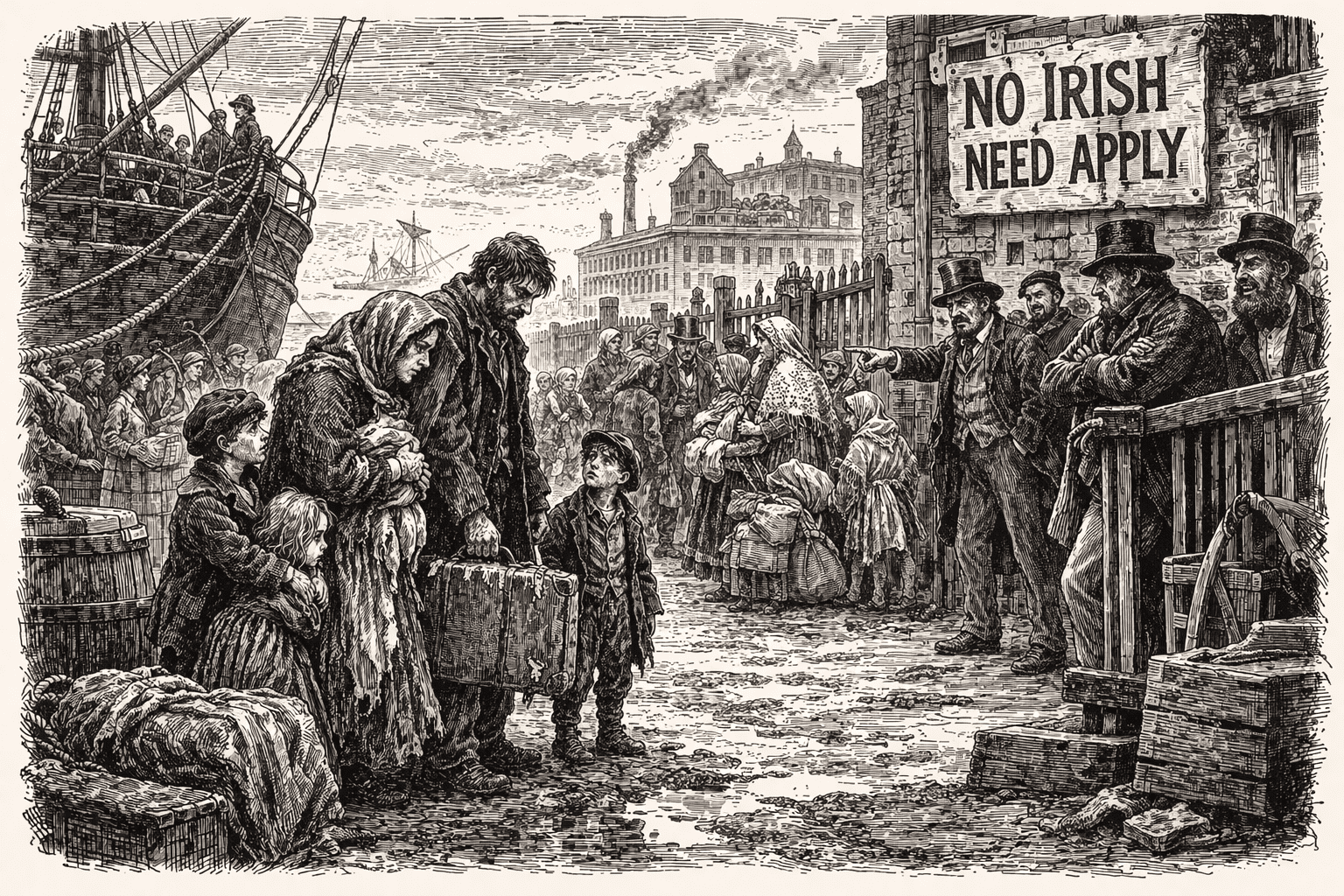
“The Irish were swiftly identified in the popular mind with poverty, disease, alcohol abuse, crime and violence – all the enduring pathologies of the urban poor.”
— Peter Quinn, Historian
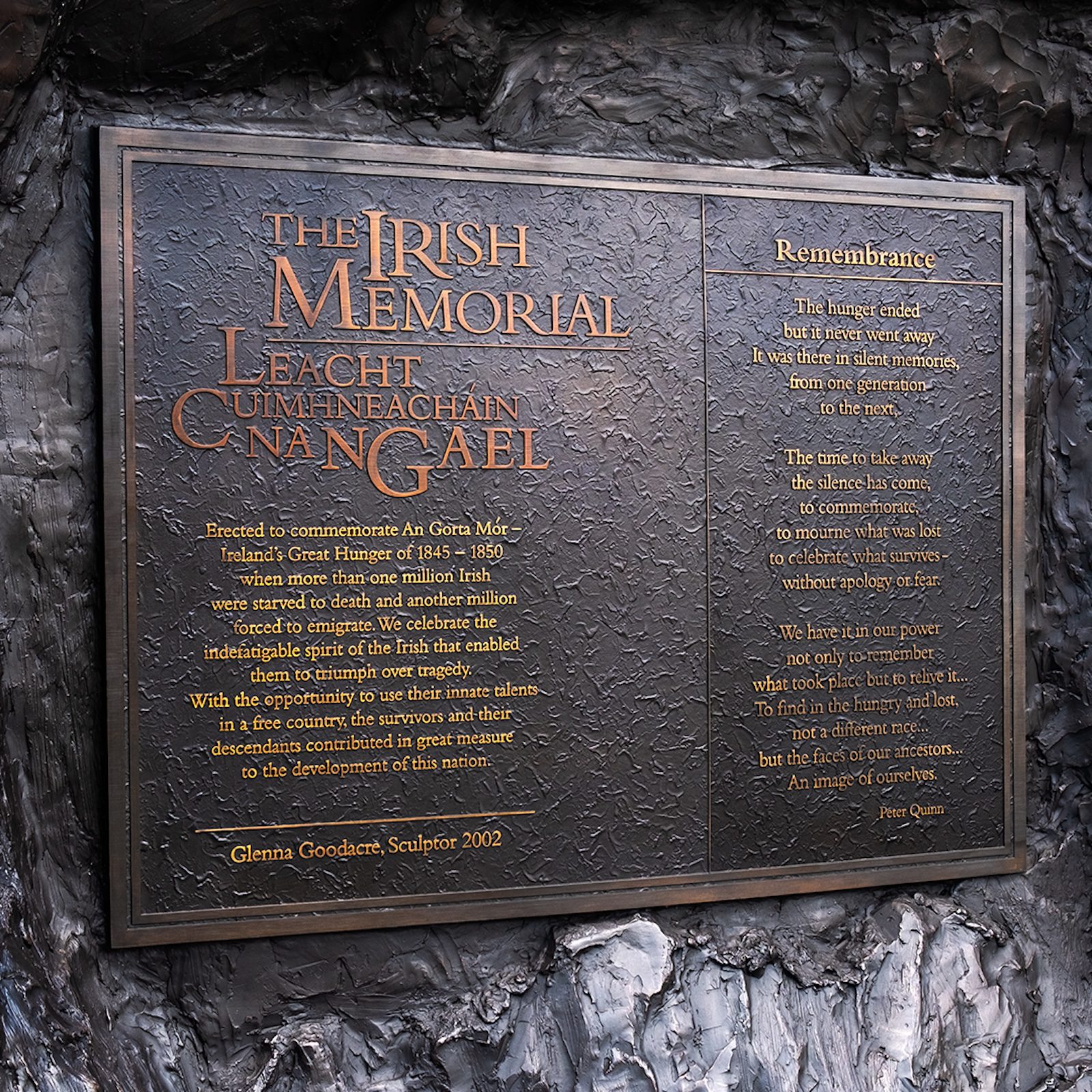
Peter Quinn’s ‘Remembrance’ captures the enduring memory and sorrow of An Gorta Mór across generations.
Remembrance
by Peter Quinn
The hunger ended
but it never went away
It was there in silent memories,
from one generation
to the next,The time to take away
the silence has come,
to commemorate,
to mourn what was lost
to celebrate what survives
without apology or fear.We have it in our power
not only to remember
what took place but to relive it…
To find in the hungry and lost
not a different race,
but the faces of our ancestors…
An image of ourselves.