
THE FAMINE POT
A Symbol of Desperation And Global Compassion
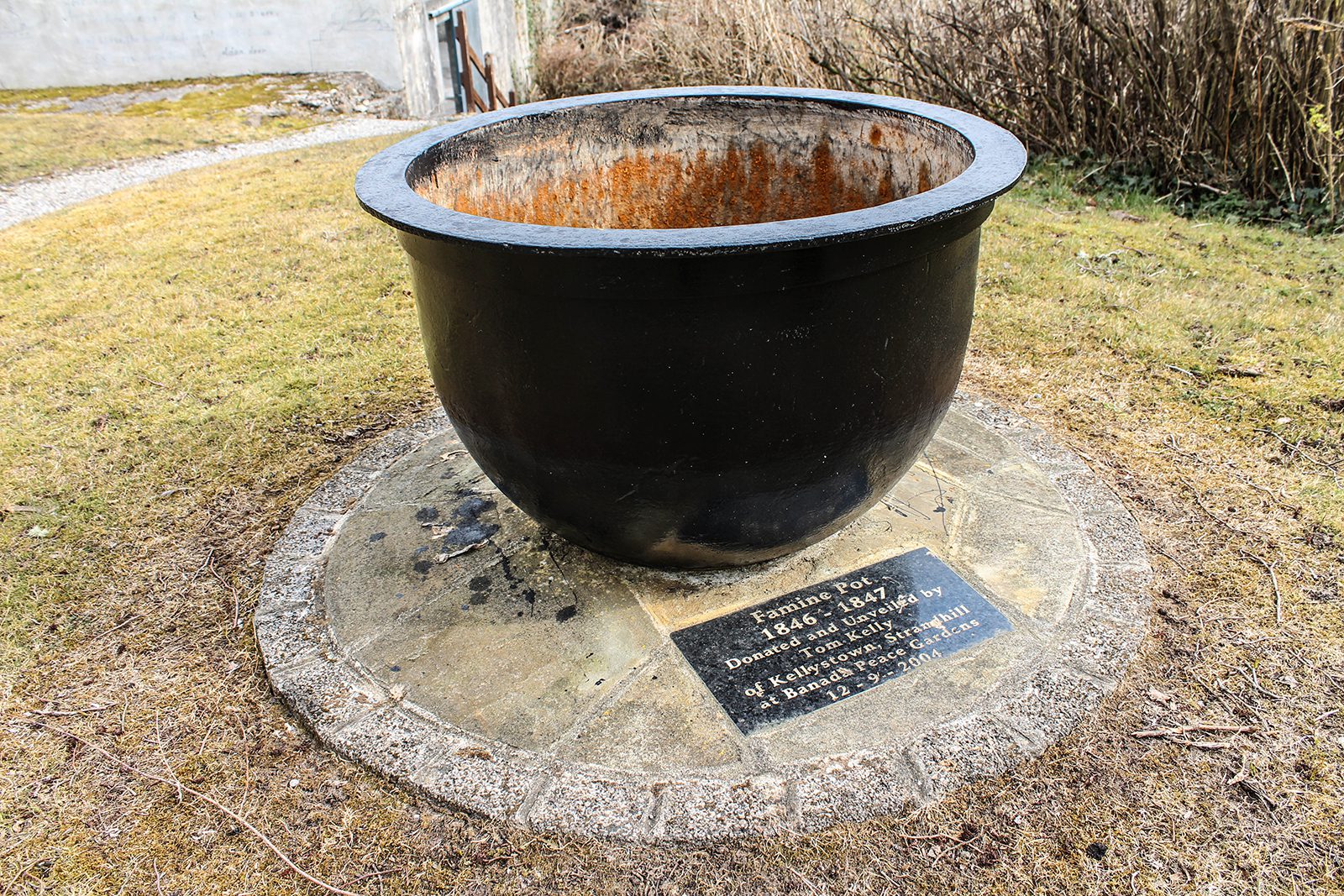
The humble Famine Pot: A lifeline for millions.
The Quaker Relief Effort
The humble famine pots’ sole purpose was to feed the starving population in the packed workhouses and in temporary soup kitchens that had been set up around the country. We have the Quakers to thank for mobilizing relief aid from around the world.
Many of them were merchants and businessmen, and through their worldwide appeals, food, money, and clothing poured into Ireland on an unprecedented scale. With only 3,000 Quakers in Ireland, they worked tirelessly, and some died from famine-related illnesses. In the winter of 1846, the Quakers provided 294 big cauldrons, which would later become known as famine pots, to set up the first soup kitchens.
Global Aid & Political Hurdles
Pots came from a number of sources, donated by Quakers from Ireland, England, and the US. The Philadelphia Irish Famine Relief Committee, led by Thomas Cope, funneled relief supplies from all over the United States.
The Sultan of Turkey also donated pots and wanted to donate 10,000 pounds. However, Queen Victoria’s diplomats said it would be unseemly to donate more than the crown’s 5,000 pounds, so the sultan officially donated 1,000 pounds while secretly sending ships with food.
The Soup Kitchens
The British government followed the Quaker example and supplied 600 pots. By 1847, there were 1,850 temporary soup kitchens in operation nationwide, with millions dependent on a daily serving of soup or “stirabout”.
However, almost as quickly as the soup kitchens were set up, they were closed. Charles Trevelyan, in control of famine policy, wanted to prevent the Irish from becoming “habitually dependent” on the British government.
The Stirabout Recipe
Unfortunately, the recipes were generally not balanced for minerals and vitamins and over time gave rise to scurvy and other diseases. Substitute ingredients were used often, like treacle and water (used as a milk substitute) and Indian meal instead of oatmeal.
A soup recipe to feed 800 people included:
92 gallons of water, 69 lbs of flour, 20 lbs of parsnips, 20 lbs of turnips, 7 lbs of beet, 7 lbs of onions, 14 ounces of pepper, and 7½ lbs of salt.
Note: Alex Soyer, a high-profile French chef, set up a model soup kitchen in Dublin where his recipes fed as many as 5,000 people a day.
A Resurgence Of Respect
After the famine, little value was attached to these pots. Many were used by farmers to feed animals, hold grain, or serve as garden planters. However, in recent years there has been a resurgence of interest in these once-vital objects, and many have been restored and given the due respect and honor they rightfully deserve.