GLOBAL COMPASSION
CHARITY WITHOUT BORDERS DURING THE GREAT HUNGER
THE CHOCTAW NATION
To understand the impact of international relief during An Gorta Mór, one must first understand the complete isolation of the Irish people. As the blight decimated the potato crops year after year, the response from Westminster remained paralyzed by strict dogma and callous indifference. While the British government turned a blind eye to the starving millions on their doorstep, the cries of the Irish echoed across the oceans. What followed was an incredible outpouring of global compassion from unexpected places.
Perhaps the most poignant and deeply felt contribution came from the Choctaw Nation in the United States. In 1847, the Choctaw people gathered in Skullyville, Oklahoma, to raise a vast sum of money for Irish famine relief. The magnitude of this gift cannot be overstated. Just sixteen years prior, the Choctaw had endured their own forced relocation during the Trail of Tears. They knew the absolute agony of displacement, the pain of losing their land, and the horror of starvation.
THE KINDRED SPIRITS
Upon hearing of the unimaginable suffering in Ireland, a Native people who had been violently stripped of nearly everything gave what little they had to strangers an ocean away. This profound act of empathy forged an unbreakable spiritual bond between the Choctaw and the Irish. It was a beautiful recognition of shared trauma. It proved to the world that those who have suffered the most are often the very first to reach out their hands to help others in distress.
That sacred bond remains unbroken today. The Irish people have never forgotten the tremendous generosity of the Choctaw. In County Cork, the stunning Kindred Spirits monument stands in the town of Midleton as a permanent tribute to their donation. It features giant stainless steel eagle feathers formed into the shape of an empty bowl. Furthermore, the Republic of Ireland established a dedicated scholarship program specifically for Choctaw youth to study in Irish universities, ensuring this shared history reaches new generations.
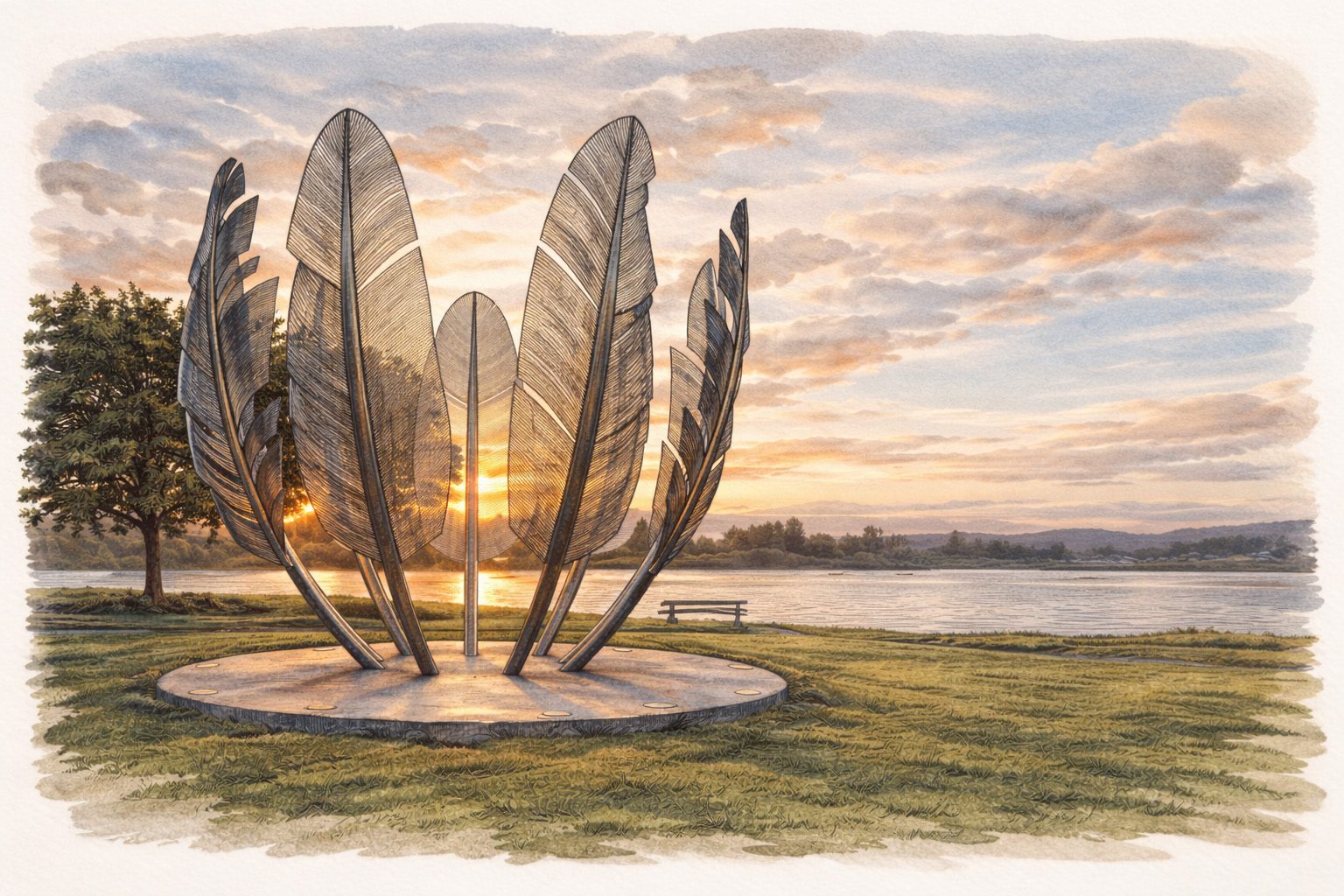
The Kindred Spirits monument in Midleton, County Cork.
A LEGACY OF RECIPROCITY
This enduring gratitude was most visible to the world in recent years. When the devastating global COVID-19 pandemic struck Native American reservations, the people of Ireland responded by donating millions of dollars to tribal relief funds. The message accompanying countless Irish donations was incredibly simple and deeply moving. You helped us during the Great Hunger, and now we return the favor. This modern act of charity proved that the connection forged in 1847 was far more than just a historical footnote.
THE ETERNAL HEART
In a beautiful continuation of this relationship, the Choctaw Nation recently dedicated a new sister monument to honor the Irish people. Unveiled at the Choctaw Capitol Grounds in Oklahoma, the Eternal Heart sculpture features a Celtic knot intertwined with a heart that physically faces the shores of Ireland. It stands as a profound thank you from the Choctaw people, cementing a friendship that was born in immense tragedy but continues to miraculously thrive today through mutual compassion and enduring respect.
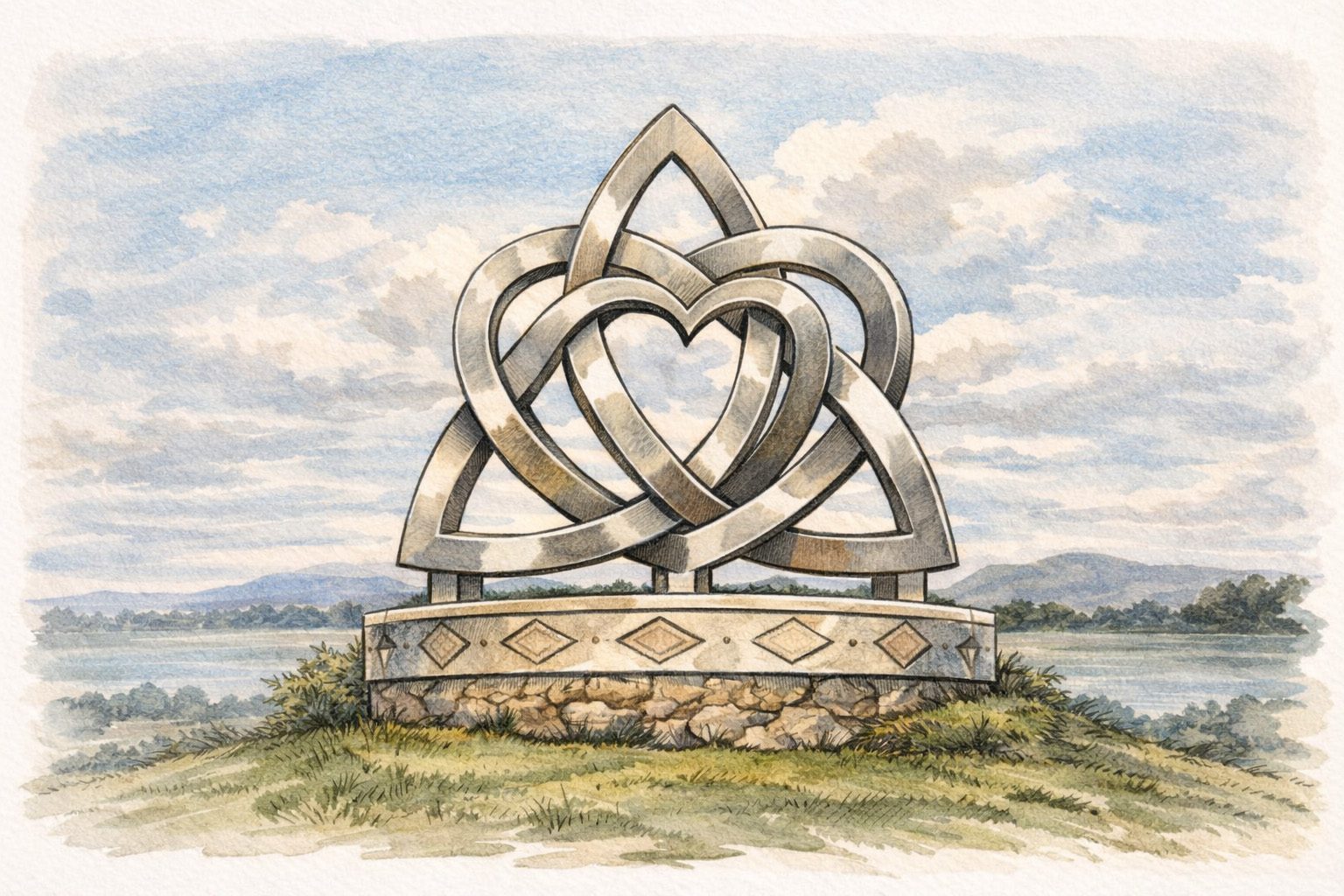
The Eternal Heart sculpture at the Choctaw Capitol Grounds in Oklahoma.
COMMITTEE OF COLORED CITIZENS
The shared recognition of oppression crossed all racial boundaries. In Philadelphia, the Committee of Colored Citizens held a dedicated meeting to raise money for Ireland. This group was composed of free Black citizens, many of whom had escaped the horrors of slavery. They entrusted these funds to the great abolitionist Frederick Douglass. Douglass was traveling through Ireland in 1845 and 1846, where he witnessed the devastating onset of the Famine firsthand, walking among the starving families in the rural countryside.
Douglass famously noted that in Ireland, for the first time in his entire life, he was treated as a man and not a color. The funds raised by the Black community in Philadelphia, delivered by Douglass to the starving Irish peasantry, stand as a monumental testament to the capacity of humanity to recognize shared suffering. These citizens had very little wealth of their own, yet they freely gave to a distant population out of a profound sense of shared humanity.
A LIFELINE FROM PHILADELPHIA
Philadelphia quickly became a crucial artery for Irish survival. The Philadelphia Irish Famine Relief Committee, working alongside the Philadelphia Society of Friends, mobilized rapidly. Led by figures like merchant Thomas Cope, the Quakers bypassed bureaucratic delays and chartered ships to funnel critical relief supplies directly into Irish ports. The Quaker soup kitchens established across Ireland saved countless lives. They operated with a quiet and unconditional grace that asked for nothing in return, feeding thousands of desperate families every single day.
This web of support stretched to the furthest corners of the globe. Substantial relief funds arrived from as far away as Calcutta and Bombay. These funds were gathered not only by Irish soldiers serving in the British Army but by native Indians who heard the stories of starvation and responded with immense generosity. It was an unprecedented moment in world history where diverse populations united to alleviate a humanitarian crisis, proving that compassion can transcend the boundaries of any empire.
CHARITY WITHOUT BORDERS
“The Great Hunger remains an unhealed scar on the history of Ireland. However, the story of An Gorta Mór is not solely one of death and abandonment. It is also the story of how the world, from the Choctaw Nation to the Black citizens of Philadelphia, and from the Quakers to the people of India, reached out to catch us when we were falling. We Irish have a long memory, and that monumental grace will never be forgotten.”
— The Irish Memorial